Tag Archives: writing

Sounding the drums

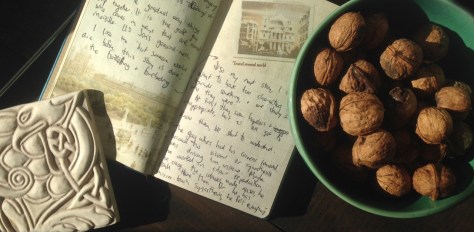
Colour writing

It was half day through day one that I felt a ripple of relaxation shift through me. When the same thing happened the next day, I understood its source. I had given myself permission to write.

This three months of creative productivity  wasn’t an easy thing to commit to. It has meant dropping out of full-time work, and a consequential drop in my income. I’m not money-focused, so the numbers aren’t important. But I place a huge value on harvesting experiences, some of which consume cash. Particularly the ones where I board a plane with a belly full of anticipation, and a thousand dollar ticket.

And of course I have bills to pay, a share in both a forest and a house truck to pay off. So I’m working in an office two days a week to cover all of this. And coffee. But parts of me have had to be put on hold.

I live in a country which is not given to celebrating the arts. Our statues are rarely of philosophers, or novelists, or painters. The result of this is that patrons are few, novelists are rare, and “suffering” for your desire to create isn’t generally understood. And so the decision to simply write takes a combination of self belief, considerate friends, and a supremely understanding partner.

So as much of a thrill it has been to let my imagination draw me forward, I have also had to plan to make my writing a business. It’s a confronting realisation. As much as this 88 days is going to be about generating stories, it is going to have to equally be about self-promotion. I don’t have an agent, nor a publisher. I don’t yet have a track record of works printed in The New Yorker, or Granta. I need to earn my own reputation.

Writing is a quiet pursuit. Me, a keyboard or notepad. Maybe birdsong, or Lorde’s new album on a lower volume than it deserves. The world has no audible or visual clue idea that I’m unfurling scenery, painting characters, summoning mythology. For all they can see, my brow might simply be furrowing in lieu of Tinder responses.

When you practice with your heavy-grunge band, the world is alerted. A couple of beers, a wall of amps, and the wail of feedback, there’s no denying your output. When I painted murals around walls, an audience was assured, commentary was inevitable. But my words threaten to lie cold within the cage of my laptop. Colourless without a mind to project them, silent without a consciousness to voice them.

I heard a wonderful quote this week, though I failed to make note of the origin. Or the exact words. But it was something like “what a joy it is to remain hidden from the world, but what a crime it is, never to be discovered”. For five years I’ve remained largely silent about my stories. It’s time to start beating a drum. And over the past seven days, I’ve started to understand that I shouldn’t be beating it just for myself.

One of my tasks in week one, was a hunt for community. And what I’m finding, is that I need to be that community, as much as to find it. Once I find inspiration in someone’s talent, or tenacity, or imagination, then I need to make some noise for them as well. I can’t write as part of a band or troupe, but I know I can be an enthusiastic member of other people’s audiences.

So I sit in the shade of the seventh morning, listening to the thudding of my heart. I’m preparing to work not just on the foundations for my own success, but also to begin  contributing to the elevation of others.
Tools for being human, part eight: Owning my age

pigs head

My age was a defining characteristic right from the start. Actually, probably before the start, measured really from the moment of conception. Once I was freed of the womb, it was a scale against  which my progress was judged. “Oh, so he isn’t crawling yet? Never mind, maybe he can be a conservative.”

It soon became part of the way I defined myself. “My name is Regan, I can draw an airplane and tie my shoe laces and I am four-and-three-quarters”. It became a ranking system in social situations. The five-year-olds got the toy rifles, those under five made do with sticks or finger-pointing. Though I did learn to draw that Remington two-finger pretty damn quick.

It was age-division that was my first experience of segregation. Specifically the great adult-child divide. At celebrations us children got a lower table, fewer items of cutlery, and higher sugar-content foods. The adults had the taller tables, more complicated social rules, and decisions to make on who would have to drive. I also learnt that certain behaviour, activities and ideologies were restricted to each side. Alcohol, untruths and high-impact cursing were strictly for “the adults”. Imagination, playtime and brutal honesty were the domain of children.

And yet my memories of childhood are largely of sunlight and adventure. I didn’t undergo any of the maturity summoning transformations that some of my peers had to face. My parents never divorced, I didn’t have to raise my siblings, I was neither abused nor abandoned. I got to be a very thorough eight year old, building fortresses from cushions, mown-grass, and imagination. I was a competent ten-year old, earning my scars by playing games of “policemen versus protestors”, riding my BMX off cliffs, and hurling adult-branded curses at bullies. And I became well-versed in the dark arts of teenageism. Blushing around girls, arguing with Dad about the length of my hair, and replacing judicious portions of my parent’s darker spirits with tea.

When I look at a photo of myself on my 21st birthday, I realise that I largely matched society’s age-expectations. I had a peer-inherited (and media enhanced) disregard for authority. I had long hair, and a tattoo with an ungracious story. I left university classes early to play bass guitar in a metal band named Shocker. And I had a Rainman-like ability to calculate the best alcohol-by-volume-by-price in a bottle store. Yip, 94% age-appropriate.

Social pressure remained relentless, if not always overt. I understood that by the age of thirty I should have been married, with a house, and maybe a child on the way. I rebelled. It wasn’t until thirty-one I had a wife and a house. And horses. I had a good, steady job that paid well, but I’d demoted fantasy and imagination, replaced some of my dreams with wants. As a result there was a tension within me, a pull between society’s expectations, and my buried needs. At thirty-three, I imploded. House, home, relationship, job. I didn’t have the emotional maturity to deal with the aftermath. So I boarded a plane.

For the next few years I put myself in situations where I lived, worked and danced with people ten years younger than me. People who labelled their hopes as certainties rather than impracticalities. People who looked for their options on a wide horizon rather than down a narrow tunnel. Ok, some of them pissed in the laundry, shat in the shower or offered loud advice from places of ignorance. But by now I knew that age was no antidote to foolishness. I started to realise that elucidation had to be earned, not granted. So I paid attention to my surroundings.

One of the greatest things about immersing yourself in an unfamiliar community, is that you have a chance of developing empathy, appreciation, understanding. Ageing is an opportunity through which we can build comprehension through experience. What it is like to sit in your first maths lesson. What it means to be afraid of the dark. What it means to be struggling with teenage ideas around gender. Imagine what we might gain if had to live through a range of ethnicities? Or if over our lifetime we gradually shifted gender? What insights and understanding might we draw?

And yet such opportunities might well be squandered. At thirty I believed that the people I could best relate to, were those of my own age. I thought that we’d been born at the best possible time, and that we shared things no other age could understand. Hair metal, misogyny, The Goonies. Besides, society frowns at the idea of inter-age mingling. It represents it as insidious, or inappropriate, or sad. At thirty-three I began to undo my prejudice. As a consequence I spent the next ten years learning my most consequential lessons in humility, creativity, and the development of wisdom, from yoofs.

One of those world-shakers was my girlfriend for much of that time. She taught me the importance of honesty, and honour. Of forgiveness.The difference in our ages wasn’t a problem until a biological alarm shifted her world. Fortunately she’d also taught me enough about self-reflection to avoid immolation, and so I began hosting couch surfers in order to fill a number of voids. And I was surprised to find that one of the most spontaneous, creative and inspirational was a woman just a little older than me. She had endless stories, she’d made beer for years, and she lived in Boulder, Colorado. Like Mork and Mindy (kids my age will get it…). I booked another flight.

She introduced me to a range of wonderful people, people who at forty, or fifty, or sixty, who still had an eye on the horizon. People who didn’t let their age dictate who they should be. People who rather than giving up on their dreams, had chased them down, and then found new ones. And since then I keep finding older-aged heroes.

Ageism is a powerful prejudice, one which build barriers and promotes ignorance. Our societies should promote kinship, not division. And as with anything societal, it is up to me to be part of any change.

So I choose to see age as a choice, not a curse. I can choose to age poorly. Choose a diet designed to challenge my heart and bowels rather than befriend them. Choose to define functional alcoholism my pointing to the one gunt in the pub that’s more pished than I am. Choose to tell myself that a sore back, a beer belly, and a mutually damaging relationship with a girlfriend I’ve taught myself to hate, are all symptoms of too many years, rather than my own poor choices.

Or I can choose to learn every day, to rewrite my prejudices through experience. Choose to summon the vigour and hope of my teens and wrap this around the compassion and care I’ve taken on in my forties. Choose to measure people by the depth of their hugs, the warmth of their smile, and their capacity for enjoyment, rather than the country of their birth, the number of candles on their cake, or their possession (or lack of) a Y-chromosome.

I choose to make (as much as possible) my own choices.

The first 24 hours…

Week one

88 days began around 20 hours ago. I started by thinking about inspirations. People, ideas, countries. And so…

A theme for week one: Inspiration

So who inspires me? I asked a couple of friends, and all of them needed a little time. Actually, Linda gave me a couple to start, then retracted. I did the same. Should it be someone who’s directly affected my life choices? What’s the difference between aspiration and inspiration? Do heroes count?

Is it more likely to be people closer to home, people I can share a beer with? I’m slowly getting to know a guy, a guy who Hunter S Thompson once described as ‘sinister’. He lives in New Plymouth, plays guitar, and once ran a vegetarian cafe in Guatemala with his wife and kids. When this gent nods his head sagely at something I’ve said, or laughs at one of my jokes, I feel better about myself. Maybe he’s a truer choice than say…Hemingway?

And it isn’t just who, is it? Everything I write starts with an idea. A seed, a catalyst. Inspiration. I’m writing this paragraph in a rural cafe, perched at the edge of a busy (for New Zealand…) motorway. Unusually, there aren’t any coffee sacks on the walls. What’s the story with those sacks? Who makes them? What do the markings mean? What of the sack maker’s family? Community? The needle she sews with, the light he sews by, their dreams for their children.

So maybe inspiration can be found in an absence. Or in nuance, minutiae, seeming trivialities. If the devil’s in the details, then maybe him (should that be gender neutral?) and I are about to become firm friends.


A muse for week one

Last week I listened to two interviews with an American author who’s now in her mid 80s. She was forthright, opinionated, and yet gracious. I could imagine her putting Hemingway in his place, if they’d ever sipped bourbon in the same bar, and he’d gotten a little salacious with a waitress.

Ursula K Le Guin lives in Portland, Oregon. She believes in the power of the imagination. She can be commandingly forthright, but apparently balances her targeted tirades with gentle humour. Any of which draws me to her already.

So I’ll be hunting out this Californian octogenarian’s story, and looking into how she might inspire me. What she might teach me. Whether she hosts writers in residence, I hear Portland’s got quite the craft beer scene…


Finally, my tasks for week one:


1. Write a letter to someone who inspires me

Someone once told me how important it was to thank the people who inspire you. All of them. She explained that it seemed to be a relatively rare thing, even for people you expect would be almost burdened with kudos. And I imagine it is a wonderful compliment, a warm affirmation.

So I thought about the people who inspired me at the time, and then I went and worked another bake shift. But the idea got caught somewhere inside, like bubblegum in the carpet of my mind. And now it is time to follow through. After all, the same person convinced me to start writing again.


I need to do this one in the first week, to have any chance of receiving a reply by week thirteen. Am I even right to be hoping for a response? Ego check.


2. Find community

In my experience to date, writing is a solo pursuit. Lonely isn’t the right term, because I don’t miss company when I write. And yet somehow I find the presence of other people useful, comforting. I like to sit in a cafe, and focus on the page or screen. There, away from the lawns, the house bus, the Internet, my distractions are different. Someone’s pose, or tone, or half-heard conversation. Maybe the way they wear their sunglasses, or nibble at their bagel, or berate their child, that gets stored, or absorbed.

But there’s also that people-need of mine which isn’t writing specific. That desire to share and exchange notes about purpose, about vocation. One of the best parts about working in a busy kitchen, was the banter, the competition to craft the best shepherds pie, the nicknames for customers, the high-fives in recognition to a particularly well curated morning playlist. I need to find a writers kitchen.

I live in a tiny town, so people are a limited resource. Maybe I need to look online. Or do a few more trips around the country to do interviews with novelists, journalists. Or perhaps it’s as simple as finding out who the other person is who buys the German rye bread from the supermarket down the road.


3. Set long-term writing goals for the thirteen weeks

I need to have some longer term goals, and I need to set them early. I also need a range of interesting tasks lined up, so that there’s always a new challenge.

At the moment I’m hoping to achieve the following over the next 88…87 days, but I need to understand whether it is aspirational, underwhelming, or madness:

  • Write twice a week about the process, my experiences etc.
  • Write and submit a short story, and start another one
  • Write a feature story and submit it for publication
  • Re-read the manuscript of my first novel, then decide whether I move forward with it, or start a new one
  • Determine what part writing will play in my life, from day 89


Ok, I’ve got a craving for rye bread. Peace out.


______________________________________________________

Below the fold

This section is for trivia, photos, links, ideas. Non-essentials. Because often what we cast aside can be as useful as the things I cling to.

Muses I considered and then discarded for this week: John Pilger (old skool investigative journalist), Ira Glass (public radio story sponsor), Ernest Hemingway (American author), Colleen Patrick-Goudreau (compassionate vegan).

I discovered the website of the “Poets & Writers” magazine last week, as they host a stupendous list of publishers. It gives me hope of finding a partnership, if not a fortune:

https://www.pw.org/literary_magazines

One of the photos I considered for this posting, then rejected, because I couldn’t find any way in which it was relevant:

uni cxamo


88 Days

Manuscript

One of the world’s greatest forces is a sense of direction. My best days are often the ones that start with me being dragged from the sleepy tendrils of my dreams by a sense of purpose. And so one of the most satisfying things I can do for myself, is to ensure I set goals.

Around five years ago, I woke to a cold morning in Cambridgeshire. I crept downstairs and slipped outside, drawing boots onto my feet, and a hat over my head. I walked to a set of allotment gardens at the end of the street. There I watched the sun crawl into the sky, lighting frosted leaves, coaxing steam from shed roofs. I made a promise before the small, neat rows of vegetables, to write.

I have produced several hundred thousand words since that sunrise over Huntingdon. Articles, stories, a manuscript. A religious text. But most of them are still hidden away. Unseen. Untested. Unjudged. I’ve probably published 5%.

Today I am setting myself a challenge. I am allotting myself 88 days in which to confront my fears around sharing my work. I’m creating a list of tasks: interviewing a hero, getting a short story published, showing the world passages from my first book.

I’ll investigate the opportunities avaibale for writers in a digital world. I’ll look into ways  I can market myself, and the places I can go for help. I’ll introduce the people and services that assist me along the way.

And each week I’ll nominate a new inspiration, someone who I hope will help me learn something new. Maybe it’ll be Gordon Ramsey, or Tim Burton, or Katey Perry. Whoever or whatever it is, they’ll be my Muse of the Week, an excuse to look at things from a new perspective.

I’ll write all about it here. The good bits, the sketchy bits, the triumphs and challenges. Soon I’ll introduce my first muse.

So. 88 days. Starting…now.


Tools for being human, part five: Lego

lego-3I think the two most transformative toys of my childhood were my bike, and Lego. The bicycle might earn a place in this list at some stage, but today I want to talk about magical Danish bricks.
Five things Lego taught me about life

1. Lego taught me perseverance

The sound of my hand moving back and forth between one thousand plastic pieces in a wooden drawer. A pause as I draw up a helpful looking piece. The wrinkling of my brow as I realise it is too long, or too short. The feeling of the gentle-sharp bricks against my skin as I re-sift. The presence of a dozen four by four bricks when all you want is a six by four. Alanis Morissette would sympathise. The satisfaction as I finally roll a blue one-er between my fingers, all I need to complete the periscope on Captain Nemo’s submarine. Lego rewarded perseverance.

These days the hunts for a lost piece are over wider areas: Car keys, credit cards, camera chargers. As I try to remember where I left something, that old Lego drawer could be a metaphor for my ageing brain, my consciousness trawling back and forth between irrelevant information, trying to draw out the one piece I need. Maybe I should keep all those useful things in a wooden drawer. Good idea Lego.

2. Lego taught me competitive spirit (or perhaps selfishness)

The battles to the last part. My brother, sister and I combing frantically, harvesting wheels in the race to build the most powerful battle truck. Their younger eyes, my longer arms, I lean further and further over the drawer attempting to obscure their views. Lego and a shared pack of fish and chips were the two surest way to encourage my competitive edge as I hoarded blue bricks and hot chips with the watchfulness of a lioness and the selfishness of an elder brother. I don’t think I ever wished my siblings would disappear, but I did sometimes imagine how much more simple life would have been if they’d been born with little baby t-rex arms…

3. Lego left gaps for my imagination

A brick is a wall, is a building, is a spaceship blast-door. The most powerful thing about Lego was that it left space for my imagination. Jagged brick lines became a dragon’s tail, a pirate’s whip (everyone in my imagination had whips after Indiana Jones) or a breaking wave. Spit would fly as I added a juddering soundtrack of explosions, laser blasts or dragster wheels spinning. The joy really was in the neutrality of the bricks, they were simply a stepping off point to a story. The creators of Dr Who understood that dodgy props and costumes don’t matter, as long as you’ve engaged the viewer’s imagination.

4. Lego encouraged versatile thinking

Perhaps because Lego let me imagine I could build anything, it also encouraged me to think outside the bricks. At its core it was a building set, and it played well with others. It had hinge and hooks, holes and connectors. With a rubber band I could enable a catapult to fire, or make the world’s most delicate tank tracks. One of my friends got a Pez dispenser for his birthday. I eventually swallowed my envy and built one out of Lego. Ok, my fish bowl wasn’t so successful, but the epic flyovers us kids built for the slot car set were Californian in scale, if a little third world in execution.

Lego didn’t make me an overnight engineer, but I learned that if I didn’t have something, then I could make it. So I built medieval weapons in Granddad’s workshop, tea-stained treasure maps in the kitchen, and launched hand-crafted rubber-band powered planes with Dad on the driveway. I’m convinced that a childhood of making and crafting has contributed to my conviction that I can make do with less.

5. Lego was a hardening agent and a catalyst for curses

For every miracle of Scandinavian toy creation there is a dark side. Bare footed night-time walks to the bathroom were the best way to hunt out lost bricks. Actually maybe that’s just a spectacularly good design feature, no piece of Lego was ever lost for long. Lego prepared my feet for jerky barefoot walks down gravel paths, and jolting runs over hot black sands. Unfortunately it also earned me a few scoldings for the foul-mouthed language of discovery, but other people treading on misplaced bricks did help widen my cursive vocabulary. Very useful for blending in at Glaswegian festivals.

Still, I’d much rather run over a pit of hot coals than a blanket covered in those jagged-edged plastic shards. A blessing and a curse then.

Lego as guru

Dear Lego,

You taught me of Dependability and versatility. You were an aid to my story telling. You taught me never to get too attached to my creations, as the next day they would need to be demolished to make way for whatever came next. You tried to teach me that there was no such thing as perfection, that it was ok to have an all red sports car, except for one side of the bonnet. We had to agree to disagree there.

Thank you Lego, for the part you played in my own construction. And thank you Mum and Dad, for paying over the odds for a Danish toolkit for my imagination.

Much love,

x Regan

Tools for being human, part two: People watching

temple-woman-modifiedThe old man is initially defined by the curve of his spine. He’s bent almost double by some malady, and I feel the warm prickling of guilt as I watch him roll one sleeve up, and look over his shoulder. But I’m over the other shoulder, at a window seat in a busy cafe with another dozen pairs of averted eyes. He tilts his body like a crane and drapes his hairy arm over the bin. Then he draws something upward, a brown, moist-edged paper bag. He shakes his head as he parts the paper packaging, drops the disappointment back in the bin and draws a slow, visible breath as he wipes his fingers on his chest. I warm my fingers on my coffee cup as I wonder when he last saw the horizon, what his mother’s name was, on which shore he left the love of his life, in order to chase a dream he thought she’d never understand.

I lean back a little in my stool, and steal a glance at the young man seated next to me. He folds a page of his sketchbook over gently, rests it on the counter. He leans back on his seat to lift pens or pencils from his day pack, and the end of a tattoo on his neck is revealed. Just a spiral really, a couple of twisting grey lines, but enough to allow me to continue drawing them down, over his chest. A tentacle maybe, from a squid, wrapped about a tall ship. Perhaps his father was a fisherman, but this thin young man didn’t enjoy the drawing of fish to the deck, the stomp to the head, the curl of the sea against the roll of his stomach. But cancer took his old man three years ago, and the myth of their connection now wraps about his heart.

When I was young I couldn’t imagine a world occupied by uncountable billions of people. By the last year of high school I knew the faces if not the names, sometimes a story, what type of bike they rode, their sister’s horse’s name. Two months later I found myself at university, trying to understand how I could be amongst so many people and yet feel so, so lonely. On the third or fourth day of lectures I sat in the Mt Street Cemetery, wondering what my options were. As I watched the shadows thrown by the lowering sun, I noticed a woman in a long, dark dress, walking slowly down the hill, picking her way between tombstones. She wore her thick auburn hair in a loose bun, her feet were tied into tall leather boots, and her eyes were on the sky rather than the path. And I began to tell myself a story. She knew a mermaid once, or at least a trans-gender Greek man who professed to have been half salmon in a previous life. And before she moved here to study Philosophy she had dated a musician, and hopes that she was responsible for a line in one of his songs. And for her Wellington was a temporary home on the way to somewhere she dreams of, writes poems about, draws sketches of. Probably somewhere with windmills and moats and scarecrows. She eventually passed out of view, but I remembered her as I walked to class the next morning, and I kept an eye on the crowd, my eye focused on possibilities rather than disappointment.

Some years ago I sat with Linda in a crowded outdoor market in Singapore. At first we are the only two white people in a spiral of Asian humanity. But the longer we sit, sipping at cool fruit juices, the closer the spiral twists about us. A young boy is concentrating on unwrapping a balloon string from his hand, and suddenly his eye catches mine. I smile gently, his head tilts a little and he reflects the curl of my happiness. He turns to his mother and lifts his arms, looking up at the red bubble above. Was the balloon a bribe, a gift, a location-detector? And as I pick out the faces and forms in the crowd, I feel the place seep into me. The strong brown arms of a vendor tying a rope under his marquee, his glance across at a women in the stall opposite, his motion pausing for just a second. And that brief pause is another story. When I take time to consider others in a crowd as people, as lifetimes, as part of a bigger family, then loneliness doesn’t make as much sense. Nor do anxiety and mistrust.

So I have learnt to enjoy sitting still and watching others. And sometimes I wonder if my observations are two-sided. Am I in turn being watched? Does the old woman in dark glasses at the other end of the cafe counter see something in the way I pause between writing paragraphs? Does she wonder why my eyes are drawn to this person or that? Does she notice my glances are often to younger women, but that I quickly shift to other targets? Does she wonder if I am embarrassed to let my stare linger on those more obvious attractions? Or is she hoping I leave that half croissant on my plate, that she might gently gnaw its buttery sweetness once she draws it from her pocket in another hour?

And at other times I find myself considering the other counterpoint to my scrutiny, what do my observations say about me? Why do I presume that the beautiful, artfully dressed girl carries the awkward longboard merely as a prop, an unwieldy attempt to be a part of an alternative crowd? Is it my own pretences that are the seed of this judgement? Or simply jealousy of the gentle perfection of her features, the grace of her stride? What right do I have to be so silently outraged at the three couples staring into their phones, rather than into each other’s eyes? Am I really so fortunate to have experienced uncomfortable first-date silences in the Facebook-free millennium?

I feel there is something useful in imagining myself in someone else’s shoes, or burka, or domestic dispute. If I remind myself that others have their own choices to make, their own mothers to please, their own dreams to chase (or abandon), then acceptance of difference is not so difficult. If I try sitting inside their thoughts, imagining their troubles, then tolerance is not such a stretch. And I’ve found that over time I have built the self-confidence to bridge that gap between myself and the stranger. I find that empathy gives me the power to overwhelm by traditional shyness.

I finish my coffee, lower the cup and press a finger to the counter in front of the young man’s slow-forming sketch of a big-eyed woman. His first girlfriend? Or a character from a dark Japanese horror? ‘She’s beautiful’ I say, looking to his hesitant eyes, imagining his anxiety, but also the warmth of pride. I leave the half-eaten croissant on my plate, and slide it gently in the direction of the old woman as I sling my bag to my shoulders and shift toward the door. I can’t see the bent man, but if I walk to the bottom of Cuba Street, perhaps I’ll be able to offer a kind presence, or a tray of sushi.

I met the woman from the cemetery again in my second semester, and she invited me to a party, a celebration of the release of The Cure’s ‘Disintegration’ album. She went on to study in Germany, and to write prize-winning novels. She inspired me to try out black lipstick, read Edgar Allan Poe, and to use a thing called electronic mail to send fantastic stories to my fellow students when I should have been studying. And her success in story-telling inspires my writing today.

So I dedicate this piece to ‘Cath the Goth’, to my fellow people-watchers, and to all those I’ve watched and never quite had the nerve to smile at, or wave to, or buy a coffee for.

100 tools for being human. Part one: Fire

flaming-june

I was raised in a lands-end suburb that bordered on a children’s paradise of ponds and gullies and hills. Men took to those hills from time-to-time, built basic shelters, shat in the earth, and burnt food in stone-bound hollows. So as we kids roamed the goat tracks and stream beds we’d occasionally come across those blackened rocks, and breathe in the acrid scents of ash and loneliness. The marks of habitation, the shades of rough men with dark purpose. Or no purpose.

In those days (and hopefully still) Dads taught kids to criss-cross kindling atop tightly balled paper, to touch a flame to three different points, to wake the orange cinders with gentle breaths. And something would draw us back to those sites of burning hidden below the bus routes and parks. We’d shed our schoolbags as we entered the clearing, and imitated our ancestors crouched poses about the dark circle. One of us tears up a leaflet advertising a furniture sale, another breaks twigs, twists their wet strands, drops them in a small pyramid over the grayscale pictures of outdoor furniture and sun-umbrellas. The last holds one of three stolen matches over their worn-edged matchbox, rocking gently, eyes on the growing pile of kindling. There is ritual in the architecture of a fire, an act which might once have determined survival in lands our bodies were not evolved to inhabit.

We urchins exchange glances, there’s a nervousness around those moments before ignition. The last piece of wood is lowered, and two of us wriggle back a little, allowing the fire-starter space. Three matches, the first skips over the worn strike-pad, not a spark. The box is flipped, the match rotated, anxious fingers scrabble under watchful eyes. Another flick, the sound is rough but still no flash or flare. We other two ache to take up the task, our empathy is false, we feel frustration. Then a quicker flick and the match head is engulfed in a glow, and we are drawn to the scent of sulphur, the dance of the tiny flame. Cupped hands, scooped forms, the burning wooden sliver is lowered towards the curled newsprint.

Fire beckons something inside of me, something buried deep. Like seeing a pair of eyes in the dark, or listening to the first seconds of Michael Jackson’s ‘Beat It’. As I age I am coached to modify my behaviours, to bury some of my ideas and feelings under layers named ‘civilised’, and ‘mindful’, and ‘Health and Safety’. I am taught, both directly and indirectly, that we are not like other animals, that we should hold ourselves above the wolves, the bison, the apes. Fire reminds me of the lie of this. It excites me, the thrill of fear beneath the joy of feeling the warmth against the cold, watching the shadows dart about the walls. In its glow I am reminded the idea of safety is dependent on fear. And I think I am far more capable if I learn to handle dangers rather than avoid them. What sense is there in being alive, if I never really feel it anymore?

The sun is lowering in the sky as we dip lower, prodding at the low flames, blowing, wafting. The paper burns away quickly, the wet twigs smoulder a little, but the last flame ascends as smoke, and the matchbox is drawn up. The strike-pad is torn away, the box becomes part of the combustible stack. Impatience overpowers empathy and the next player draws up the tools of ignition. The next match is struck.

I find fire is a great conversational companion. It allows the eyes a distraction without demanding their attention. And it is sensuous. The shift of light defines us loosely, our form sketched rather than photographed. And we are allowed to be defined by the imagination as much as by reality. A meeting under flame is three times as likely to lead to intimacy. Probably. Some of my most evocative memories of the past are centred on bon-fired beaches, or fire pois, or a candle-lit stairway leading to a low couch, a bottle of wine, a hope for intimacy.

Us three young boys (at this age society has separated us from the girls, the horse riders, the hair-plaiters, the more capable minds), we work again with blowing and coaxing and wishing. We sacrifice a homework assignment drawn hurriedly from a leather satchel. The blue-printed questionnaire holds a long flame and our mouths form ‘O’s’ of wonder, and we pause for a second in the stretched yellow flickering. Then the paper is dropped and we shift twigs. And two of them catch, and white smoke begins to curl, lit up by the few spears of sunshine that penetrate the bush canopy.

Sometimes it is a radiant fire on a cooling beach, the lightest of winds drawing the smoke away from you (for now).  Someone picks at a guitar, or speaks words, ‘Once, a long time ago…’, and our minds are released to travel on a voyage, to draw the characters, the situations, the Gods and beasts and heroes. And beyond the reach of the flames there is room for the imagination to plant stories, and monsters, and mythology.

Other times there is just you alone, over a flame in an old pan, holding a photo, or an agreement, or a letter of rejection. You can delete an email, or the last contact from a lover, or the image of an unholy prophet. But how much more cathartic is it to hold a thick sheaf of paper above a flame, lowering just a little further, feeling the heat of the smoke curling over your knuckles. Then the thrill as the flame runs along the edge, leaving a blackening shadow.

The embers pulse gently, the three of us talk of a great journey for the next day, on bikes into the hills. Maybe the horsey girls will be there. One of us begins to stand, tucking the last match and slice of box into a pocket. Another of us sprinkles soil over the embers, hands hovering over the gentle warmth. Then the three of us shoulder bags and move up the hill. None of us can resist a last backward glance at the pit. A brief silence gives way again to plans and schemes and nudges and laughter.

A fire is infinite form. It is a destroyer and yet it is born before us, from spark and breath. Flames to hold back the beasts, extinguish the shadows, summon the Gods. It is to be respected, and anything which allows reminds us to be humble is to be treasured. Humanity isn’t at its best when it ranks itself above all else.

Unbinding myself from my masculine story in order to grow

Women

Photo coutesy of the fantastic Roni Kay…

There have been two points so far, at which I have had to re-invent my novel. The first was when I realised that the central story wasn’t big enough, and I replaced a distinct vodka with a unique religion. The second rewrite became unavoidable when I realised that if half of my characters were going to be female, I had a lot to learn a lot more about what it means to be a woman.

That epiphany was the result of three awkward periods of self-discovery. I experienced the first of these after I managed to almost completely destroy a friendship with an adventurous and astounding woman, Elza, through my inability to understand her perspective. The two of us spent several months travelling together, and yet the whole time we also moved further apart. The silver lining to what was a dark cloud was that honesty on her part allowed for introspection on mine. I was at least able to learn a valuable, if emotionally expensive lesson.

The second flashlight to be shone on my gender naiveté was held by another inspirational woman, Linda. I’d always found ways to convince myself that there were no vast differences between men and women, that it was simply our individual experiences that led to misunderstandings. But Linda helped me see that as my own experiences had only ever been as a man, I had ended up with a strongly gendered bias to my thinking. Yes, I was a product of all the things that had happened to me, of my environment, of the people I’d spent time with. But it would have been impossible for a woman in similar circumstances to have the same experiences. Society’s attitudes towards gender trumped my hope that we weren’t so different as we all seemed to think. Shit.

Around this time I read a Margaret Atwood quote, which compounded my understanding:

“Men’s great fear is that women will laugh at them. Women’s great fear is that men will kill them”

I spent some time bouncing between the two sides of that quote, combating my defensiveness. Both Margaret and Linda had helped shift my perspective in a new direction.

The last twist to my viewpoint was a short, sharp one, encountered around half way through the film ‘Wild’. In the scene that challenged me, Cheryl Strayed is alone in the woods, and she’s approached by two hunters. My presumption at this point was that things were going to go dreadfully wrong, and I wanted to be anywhere but in the theatre, watching what I thought would happen next. It was my intense relief when the men didn’t attack her that shook me. For years I’ve tried to point out that the media’s to blame for other people’s heightened fears, but I have to accept that I’ve been shaped by the way ‘they’ portray the world as well. And if the media’s amplification of a history of men subjugating women has made me uncomfortable at the idea of a woman caught alone by two men in the wild, how much more fear must that idea hold for some women?

I spent a lot of long walks rattling around inside my head after that, trying to make sense of all this. I explored my past. To what degree had I sexualised past friendships? How many relationships had I destroyed through wilful ignorance? How many women had I scared through my actions, or words, or attitudes? It would have been easy to tie myself to my failures, to see myself as a bad person. But in my heart I believe that I am good, and that I am the engineer of my own future. So I decided I needed to stop digging a pit and start building a bridge. I resolved to do better, to be better.

The interesting thing about taking so long to write a novel, is that the rewrites can mirror your experiences. This rewrite of my story began with a look at my characters. One character was blind, and I’d spent a lot of time trying to write as a person without sight, as someone who draws the world inside her head. But two of my four central characters were female, how much consideration had I given their experiences as a women in determining their paths through the story? Not enough.

So I began to read more by female authors. I examined the great conversations of my past, how often was it a woman who kept me awake, offering me new ways to examine Christianity, or gun control, or Israelis? Or Batman?

And then I walked from one side of Spain to the other, usually in the company of astounding women. And through this time I began to rewrite my female characters, as women. My principal character is a man, but he had to change too, his motivations, his confrontations with himself, the impact of these women’s new decisions on his plans. In fact he really had to step the fuck up. To say much more would give away too much of the plot, but I know that when I write the foreword I will be thanking a number of influential ladies.

I don’t want to be an apologist for men, I don’t see much value in trying to explain what shaped my biases in the past. But I do want to say thank you to all the people, men or women, who have contributed to me being a better person today. Some of you managed to improve my world view in as little as 24 hours, astounding. I will always be to a degree the result of what surrounds me, so I’m making a promise to myself that I’ll continue to as often as possible surround myself with good people. And I make a promise to all of you, that I will do my best not to cause fear, or anxiety, and to try to put myself in your shoes.

Juggling truth and fiction

Twain and I

It’s been a while since I posted on this site, because I find it difficult to write fiction and fact at the same time. But I realise that it is important to move forward, to become more capable, not to simply label myself as incapable and find acceptance in that. So time to try juggling fact and fiction. And US politics* seems a good place to practice that particular dexterity.

I recently watched Michael Moore’s ‘Where to Invade Next’, an exploration of governance done better. And it reflected what I’d experienced in my time in the States. I could see so many beautiful ideas that had found expression through the formation of that country. But many people I talked to expressed dismay at the changes in the way the country was going. It’s so hard talking with people whose hope is failing, when you’re bubbling inside with all the possibilities you’ve found.

I think something Michael Moore and I would agree on (and I’m sure there are many others, attitudes to diet and trucker-caps notwithstanding), is that it was the ability to start anew was at the heart of what made America attractive. You were less fettered by convention, your ancestry didn’t determine your path through life.  But one of the most damaging aspects of ‘progress’ is the ability to communicate ideas to populations instantaneously. Once the barriers of landscape and environment are eliminated, you become subject once again to other people’s spheres of influence. Fears, prejudices, lies, airport security measures, Indian Jones 5.

I watched another film (hey, it’s almost winter and I’m saving money for the next adventures…) last week, ‘Hunt for the Wilderpeople’. It reminded me of how individual my country had been when I was young, when it was truly an island adrift from the rest of the world. For a brief period there, there was a chance to build something special, to export something positive, to live up to our image as somewhere pure and clean, yet rugged and enterprising. But alas, we sold out, and now our Prime Minister is someone who thinks we should make decisions because ‘that’s how we’ll get rich’.

Obviously I don’t have the answers to all of this. But I’ve learnt to try to do better. I’ve learnt to live thoughtfully, to understand and counteract my prejudices, to spend more time with those people I admire. And I have to find a way to write about the things I care about through this blog, as well as through a novel. Because you have to make the world a better place, not just wish it was one.

Of course all this earnest positivity will always be mixed with beer drinking, outdoor adventures and Mexican food. And hopefully alongside an ever-changing cast of inspiring people. I need to brave enough to confront my mistakes, but also to have the courage to risk making new ones. And I love all the people who ever encourage me along that treacherous but rewarding path.

I’d like to dedicate this post to Linda and Kylie, two people who remind me of the rewards of being open to try something new. I’m looking forward to the next Port tasting…

*Ok I didn’t really get ’round to talking about US politics, but it’s a little hard to steer away from cynicism when discussing that particular race towards devolution. See?

When I was young(er)

When I was young I thought life would be complete if I had a beard like Grizzly Adams, a car like the one in Smoky and the Bandit, and a girlfriend like Michele or Dale in my class. I always knew the girls at school were always better than the ones in the films, they were real. But I still held on to my signed photo of Wilma Deering from Buck Rogers. Just in case.

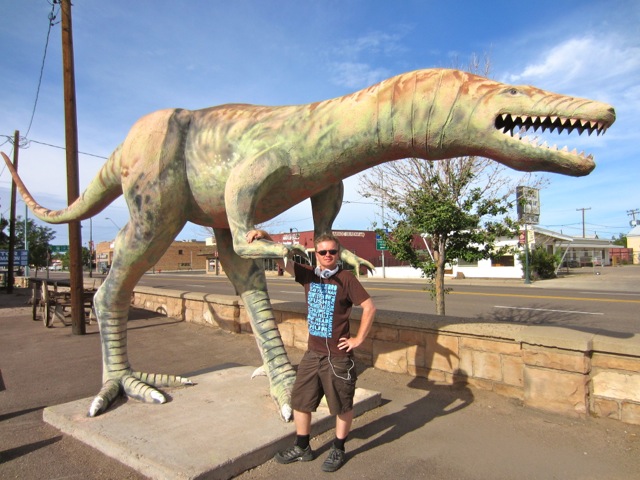
dino

When I was young I made a pop-up Valentine’s Day card for the most beautiful, funny and athletic girl in my class, but she never received it. I remember looking at the pink ink running down my hand as I stood in the rain, three doors down from her house, trying to summon the courage to ring her doorbell. I’ve still got the card, I think it’s important to remember how big those small moments can feel. And my Mum found it hidden in my wardrobe and stuck it to the photo-board at my 21st birthday party.

When I was a boy I understood that people died. I remembered the sight of my Grandfather’s chair when he was no longer around to sit in it, and laugh loudly, and hand me giant tins of oysters. He died in his sleep, and I presumed that was the way I would go, not riding my BMX off the skateboard bowl, or running down the train tunnels as the train entered the far end, or being put in a ‘sleeper hold’ until I passed out. Years later people tell me that I’ve grown to be a little like him, and that makes me swallow, and blush, and feel proud.

When I read the comics I found at garage sales, I thought that Sea Monkeys and X-Ray Specs and Joy Buzzers would be and work exactly as advertised. Some adults feel the same way about international trade agreements, capitalism and world heavyweight boxing matches.

When I was young I thought that selling the life-size picture of Boba Fett I drew (with 18 felt-tip pens) to Kelvin for a can of coke and a go on his bike, was a sure-sign of my artistic future. Then I took art with Ms Manthell. She inadvertently taught me that the power of art was no longer in the hand of the artist, and never to trust an art teacher that didn’t like Kate Bush.

When I was nine my main rival for smartest kid in class was Kieran Bleach. It didn’t matter that she was a girl, it did matter that she beat me in spelling tests. She went to a girls school when we turned eleven, and I missed my nemesis. And learnt the word nemesis. A year later a ‘Fijian prince’ joined my class. It didn’t matter that his skin was a different colour, or that he had an accent (ok, maybe the accent was a bit fun), and eventually it didn’t matter that he was a prince. It did matter that he was funny, and fast, and had the biggest smile. It’s the truly important things that matter when you’re a kid.

When my Dad told me he went to school with the Six Million Dollar Man, and beat him in running races on school sports day (pre Bionics, obviously), I kind-of believed him. I also believed in George Lucas. My Dad never let me down.

I believed with great certainty in my own form of god, and in reincarnation. I can’t pinpoint the moment that being reborn in another form no longer made sense, but god lost his/her/its hold as I was drawing Wonder Woman in art class. I’m still not sure about Wonder Woman.

When I was young I sometimes wondered if the whole world existed to contribute to the story of just one boy or girl – that child was the star, everyone else was just ‘extras’. I wondered if I was the star, or just another player. Then I wondered if I had enough coins for a k-bar. Philosophy is transient when you’re eight years old, sugar is forever.

When I was maybe eight or nine years old I had my first dream in which I realised I was in a dream, and as such I had the power to do ANYTHING I WANTED, without getting in trouble. So I splashed in lots and lots of muddy puddles, then woke up clean.

When I was at school, and girls were almost as much a mystery as now, I loved and feared the furtive communications network of note-passing in class. As I aged, email or texts had a little of this power, but you don’t have a chain of giggling friends passing your email to you, threatening to read it. And email doesn’t smell like a freshly torn piece of maths-book paper.

I read about other lands, other countries, but at times they seemed so impossible, so far away. I thought that there was a good chance that New Zealand was the extent of the world, and that perhaps when people boarded a plane “they” simply gassed them all, and the people dreamt they went to far off lands. “They” didn’t figure very much in my childhood. In those days all burglars wore masks, all cowboys wore hats, and all policemen had moustaches. Then one day a girl who had always teased me, upset me, and called me square-head… she kissed me. All bets were off.

When I was young, I valued the idea of valour, I wanted a code of honour, I loved the idea of chivalry. I believed that most adults had my best interests at heart, and that the ones that didn’t were cautionary figures; at worst cartoon villains – scary, weird, but not capable of true evil. I had no idea how fortunate I was that this belief lasted my entire childhood.

One of the most important and telling things about my younger years was that I believed I could be or achieve anything. There was no such thing as probabilities, possibilities or impossibilities. Any objective could be realised with a mix of imagination and time. Imagination was more powerful than adults, film-reviewers and physics. A childish idea of Time was the key though, it could negate all barriers, if I didn’t achieve something today that didn’t make it impossible or unlikely, it just meant I might have to wait until tomorrow, or until I was ‘old enough’, or until a blue moon. When I was young a week was like a year, unless next week was Christmas, in which it was forever.

I’m at a different stage of young now, I think (hope?) that youth is a spectrum rather than an on/off state. I’m still in the lower end, just up from the BMX loving, shy-around-girls section, and hope I always will be.