Tag Archives: writing

Capturing stories (and working for the greater good)

Around three months ago now I finished full-time work in order to have the time to focus on two endeavours. The first was my fiction writing, this had been tainted by working in a role that eschewed imagination, and moving to the country has given me wider horizons in which to let my imagination gallop and play. The second was my supporting role in a new company, a venture whose goals were more compatible with my morality and world views. A business which believed in the cultural value of stories.

Cards two

I’m a huge believer in the power of a good story. That’s both blessing and curse as a writer, as it inspires me to want to write great books, but it means that rather than simply telling a tale, want to weave ideas through the text which might inspire, transform, or at the very least inform, rather than structuring them like a film and hoping for a movie deal. I feel a need to honour all those story tellers that came before me, because I know how important their contribution was to my world.

When we are young, if we are fortunate, then we had a relative who would induct us into the world of guided imagination. They might have told us stories from their past, or stories from their imagination. They might have read us tales from thick books, compilations of fables curated by Aesop or the Grimm brother’s, maybe they ad-libbed a little as they read, or added in sound effects or frights, perhaps they changed voices for the talking bear, the frustrated witch, or General Woundwort. Those recited words can play a huge role in our development, helping us counter arachnophobia (Charlotte…), inspiring us to travel (every Irish, Norse and Navajo legend I ever heard), or simply inspiring us to learn to read ourselves, so that there was never ‘one last story’. Not while there was a functioning flashlight in the house.

As we get a little older many of us learn to read ourselves, and we begin to choose our own stories. I remember finding a copy of Peter Benchley’s ‘Jaws’ on the book shelves of a holiday house one wet summer. The thick book had the infamous movie poster on the cover, gaping shark jaws open below that late night swimmer. I’d anticipated sharks and drama, I hadn’t expected sexual explicitness. I took to reading it outside or at night, where my blushing resisted invocation or at least detection. And when we leave school in order to become the protagonist in our own tales, hopefully we continue to read. I have found solace, wisdom and inspiration in books my whole life, worlds to escape into, and things to bring back from them, into my own narrative. Including a little from Jaws.

The company I’m working with exists to assist with people with the preservation of stories. We work to create copies of items of enduring cultural value, and enable those copies to be shared with people separated by time or distance. We make detailed copies of cave paintings, maps, books, artworks and carvings. Similar endeavours around the world are mapping ancient civilisations from the sky, or using technology to help rebuild the walls of ancient temples, jigsaw puzzles with one tonne pieces. Efforts are being made to capture everything from baseball cards and comics to death warrants and viking longboats, as they’re all vessels for stories.

My daily tasks for the company vary, sometimes I’m driving to small coastal towns to capture fragile maps, more frequently I’m processing thousands of images, from fashion drawings to diary entries. But a two things I’ve encountered in the past week helped me understand the value in capturing so many aspects of culture, as I colour correct yet another photo. First I was reading through the ‘About us’ page on ‘WikiLeaks’ for information for an article, and amongst their principles was ‘the improvement of our common historical record’, and this idea sat with me. Then last night I was reading a few passages from a book called ‘Woman who run with the wolves’, by Clarissa Pinkola Estes. She talks of the importance of information passed from generation, as myths and stories, and how so many of these have been altered by the dominant society, stripped or altered so suit the dominant religion, or sense of morality of the time. And in the process we lose important elements of the original story. And I realised, we can’t let the recording of history be the province of a select minority. That has led to one-sided tales, to distortion, to the eradication of cultural elements, and often to the elimination of the female perspective. Instead we need to capture as wide a gamut of society, of culture, as possible. The hauntings, the messiahs, the sasquatch, the unicorns, the trolls, the elves, the barbarians, the werewolves, they are so much of who we were, and who we might be.

So I’m proud of my two paths. I’m pleased to have continued to write every day, to try to improve my story-telling craft. And I’m proud to be working with Heritage Studios, with creative people, helping capture other people’s stories across the Pacific.

If anyone would like to support Heritage Studios in their story-saving mission, please look us up on Facebook, and like us if you like what we’re trying to do!
https://www.facebook.com/HeritageStudiosNZ

The potency of ideas

reclaimed_world_v_by_reganbarsdellWhen we talk with people, frequently the conversations are about people or things. But a friend pointed out to me that the most enjoyable and unforgettable conversations, the ones that keep us up until 3:00am with light in our eyes and a music in our voices, they tend to be about ideas. I love these freeform explorations of theories about life, about love, about the games people play and how sometimes we just want to stop playing. We chase down possibilities and implications for hours, and as the sounds of a new day penetrate the haze of weariness we slip off to bed with dry mouths and happy hearts. And occasionally the ideas echo in our dreams and become part of us.

Of course ideas are often humble, ephemeral, things. I might have an idea that tea smoked sweet-potato might work well with a pork and cider casserole. The world doesn’t shift. But at their most potent, ideas can change lives, families or even the direction of the world. The distribution of confidential files via WikiLeaks, the creation of Braille for the visually impaired, the recording of Prodigy’s ‘Firestarter’, these things were not accidents, they were all the result of ideas. The idea that there should be ways for anonymous sources to distribute important information, the idea that the sense of touch might replace that of sight in reading, the idea that there was room for an aggressive shift in UK dance music. The fundamental power of ideas is in their ability to transform, to invoke or contribute to change. Sometimes that results in a new flavour of crisp, occasionally it spurs a significant shift in global politics.

As a writer, I’m far more likely to attract people to my novels if I can raise interesting ideas. A novel is four hundred blank pages in search of an engaging concept. I want a night spent with my books to leave the reader feeling invigorated, excited, occupied, just like I do after an engaging conversation with friends. So I spend time reading of wolf hunting in old Russia and imagining what might happen were this tradition brought back to the rejuvenation zone around Chernobyl. I’ve spent the last few days trying to track down a Rabbi with whom I can discuss Judaic ideas on how to start a modern cult. I’ve started outlining a story set inside the hope bubble that ballooned in the second half of 2008 as the world held its breath as votes were counted towards Barack Obama’s election to presidency. The more I work with ideas, the more I understand of their potential.

But it was quite recently that I realised the impact that my own adoption of ideas had on directing my path through life. From ‘I need to visit a new country every year’, to ‘outrageous behaviour is my best hope for engaging with others and combating shyness’, ideas have long been the sub-conscious authors of my destiny. And with this realisation I began to understand ways in which I could take a more active role in plotting my own story. I examined my ideas about myself and the world, and I dropped a couple of them, and took on a couple of others. So now I have a few guiding ideas, they’re a little like beacon fires lit on distant mountains, they’re reference points for when I’m feeling a little lost. If I’m not sure whether I should pack in my office job and move to the country, I look to those ideas for an answer. If I’m not sure about whether I should begin creating my own alcoholic bitters to sell at local weekend markets, again my ideas can offer enlightenment.

Of course this means the ideas I choose to adhere to become very important, as they’ll influence decisions on everything from relationships, to careers. I’ve become even more reluctant to take on someone else’s ideas. If I come up with a new idea myself then I have a chance of understanding of its genesis, but if I opt to take on someone else’s philosophy, then I owe it to myself to examine it carefully first. What are the costs and benefits, for myself and others? What evidence is there that it will lead to improvements for me, for my community, for the people I care about? I owe it to myself to analyse ideas before I choose to adhere to them. Thank goodness for those people who love long conversations over mulled wine or cider.

Nine years ago an Irish tour guide described to myself and a room full of backpackers his most recent journey. His description of the El Camino de Santiago, a 500 mile walk across the north of Spain with an ever-changing cast of characters, was enticing in itself. But it was the idea behind the walk that seeped into my sub-conscience, and eventually resurfaced a couple of years ago, after another set of long conversations. Last night as I wondered about the best way to deal with blisters, I listened to a Galician woman express one of her ideas about the Camino. She explained that many of the pilgrims started the journey with a pack heavy with the weight of their fears. They carried extra shirts against the fear of their own odour, medicine kits against the fear of illness and injury, and chemical repellents against the fear of insects. But quickly they come to understand the burden of this extra weight, and they begin to shed their baggage. And within a short time they travelled lightly, for distances which stretched beyond the end of the trek.

In three weeks time I won’t just be setting off on a long walk, I’ll also be embracing a new set of ideas.

Understanding wisdom, part one: The good

Sandy boy One of the benefits of ageing (usually promoted by the aged) is that as the years pass and the lines deepen we gain wisdom. I imagine wisdom as functioning like a crystal ball, but rather than being fuelled by magic, it’s powered by knowledge accumulated through experience. And as we gain wisdom that gypsy trinket becomes more powerful, it enables us to gain insight into the potential consequences of our actions and decisions. It might not help us predict the future, but it can empower us to alter the way it unfolds.

Hindsight is an insidious gift, it enables me to imagine an edited version of my life. How many times have I wished I could rewrite a year, an hour, a moment, knowing what I got wrong the first time?  How much more accomplished might my life be if I could undo that thoughtless comment, that spending of a taxi fare on three more drinks, that stuttered and premature admission of desire? But hindsight is also useful, especially if I use it in an equation like this: hindsight + consideration = wisdom. And as hindsight is only possible with experience, experiences are a necessary part of developing wisdom.

I’ve tried to rewrite this equation, adding in a component for any knowledge that I acquire through reading, research and television. Hindsight + consideration + Frank Herbert + Twin Peaks = wisdom. But I think I was fooling myself, I don’t believe watching Pretty in Pink or 500 Days of Summer improved my ability to make more considered romantic decisions. Not compared to the stinging memories of public rejection, scorned tattoos and love gone wrong. My discomforts, my excruciating embarrassments, they have provided far more coherent and consequential lessons than any film or book. Except maybe Once.

That hasn’t stopped me attempting to short-cut the wisdom crafting process though (and ignore my equation). After making the decision to switch to writing for a living I tried to cram wisdom. I studied freelance journalism, read Steven King’s “On Writing”, and watched every season of Californication. And three years later I now understand that it is writing every day which improves my capabilities as an author, not reading about how to do it. I imagine the same applies to knife fighting, ventriloquism and parkour. Making decisions, trying new things, taking action, that’s the way to build wisdom. And living an eclectic and varied life comes with serious fringe benefits, being willing to try new things is the greatest way I know of to combat prejudices, whittle away at naiveté, and teach myself to be humble.

So undergoing experiences means we develop hindsight, but that’s just one of the components of my equation. I spent a lot of time in my twenties and thirties running away from conformity, from repetition, from ruts. I gathered stories and leapt into adventures, but somehow wisdom seemed to side-step me. I’d recover from the more painful mistakes by jumping into a new adventure, and somehow the failures became just a measure of how resilient I was. How nothing could break me. So many of those failures could have been avoided with just a little reflection, a little consideration. I didn’t take time to examine how my wins and losses were affecting me, nor how they affected others. And instead of wisdom I ended up manufacturing regrets. It was only around four years ago that I found the courage to simply slow down and examine my darkest moments with as much scrutiny as my brightest. And in forcing myself to examine past decisions, I finally started finding ways to improve my future. Some wisdom, at last.

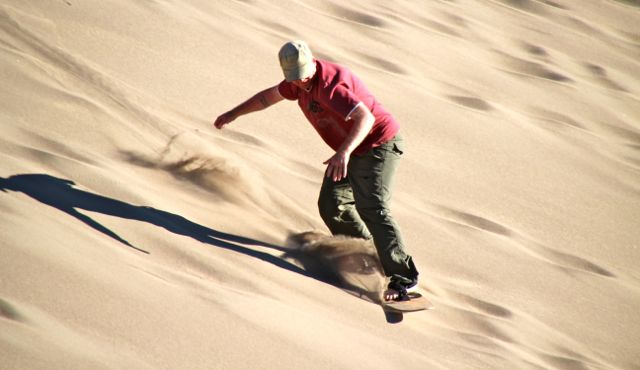
So my ongoing advice to myself is two-fold. Firstly, say yes. Do I want to try out my neighbour’s new crossbow over a couple of cans of beer? Yes! Though accumulated wisdom tells me that switching to Bourbon after we run out of Stellas is a bad idea. Through doing, learning, achieving, I grow. Secondly, there’s that consideration side of my equation. I need to reflect on my experiences, in order to develop. If the natural progression of spending Thursday nights firing bolts into bags of sand is dressing in a camouflage onesie and tracking sun bears with a loaded automatic weapon, then maybe it’s time to switch to sand boarding. I’m not so good at the killing.

In five weeks I’ll be looking up at the Pyrenees from a small town in the south of France, and taking my first steps on a five hundred mile walk that runs from Catalonia to Galicia. I’ll be exchanging stories over ciders, popping blisters next to open fires, and trying to avoid accidentally ordering octopus in Basque. My strongest motivator for this journey is introspection, both my own, and that practised by the other pilgrims. After around five weeks of walking I should reach the West coast of Spain, at a little place called Finisterre, and there I’ll look out over what was once considered the end of the world. And I’ll reflect on what I have done, knowing that while I might not have found answers, with some consideration I can at least ensure my experiences generate some wisdom.

I’d like to dedicate this to the memory of my grandfather Colin, a man whose wisdom I never took enough advantage of. But his curiosity about the world was inspiring, and I’ll be looking
out for him in the changes of weather above France and Spain. Laters Grandad.

Horizons (charging into)

Kapiti cropped large

Two days ago I finished writing a story. It began as a tale about two kiwis and a Canadian who decide to use gangsters and mobsters to market their new vodka, hoping to gain street cred and instead attracting a range of terrifying challenges. But I was somewhere between New Mexico and Utah two years ago, watching electrical storms on four horizons when I realised that Vodka just wasn’t enough. As I viewed spectacular lightning splitting dusky widescreen horizons, I knew my characters needed grander problems than smuggling spirits into Liberia and the Ukraine would earn them. I needed to take on something that would echo across the world, something which would require commentary from the Pope.  So these human lightning conductors decided to invent a better religion, and the vodka became part of the back-story. But that’s another story for a different day, publishers willing.

Soon after I began work on the book, I started writing this blog. As I set off on a research trip to the USA and Europe my life seemed to have become interesting enough for me to find something to write about every couple of weeks. I find that when I’m travelling I live at a much faster pace. Each day lived seems so visceral, so textured, so rich. Every meal is newly spiced, every conversation has an accent, every dawn is described by new sounds. Each morning makes a promise, that the day will harbour some lesson, some learning, some new understanding. I want to share the revelations, the encounters, the mistakes and consequences. And then I return home, and that pace drops away.

I haven’t posted anything here for eighteen months, not because I haven’t been inspired, but because the achievements were gradual ones, and their rewards were ones of delayed gratification. And because working in a job for an income rather than outcome stifles my imaginative creativity. It’s been a period of building for me, a passage of time during which I’ve managed to set myself up with foundations for a simpler life, one which enables freedom and creativity. And it has helped me further understand the joy of simple living, with kind and thoughtful people. But my passport hasn’t been soaked with the sweat of border anticipation for far too long, and my pack lies forgotten beneath my bed, comforted only by memories of a brief and beautiful jaunt through a Buddhist kingdom. And I want to write a new book, so I need character inspiration, semi-autobiographic comic relief and the rewards that come with making simple mistakes in unknown lands with friends I haven’t met yet.

I’m six weeks out from a flight to Paris, I’m buying walking shoes and train tickets, and my heart beats louder in my dreams. The world is opening up again, my skies are wider than an office window, the winter storms are all around me, unframed, unbound. The pace is picking up, the sound of a jet overhead has regained a personal significance, and as I watch others post photos and thoughts from Castle Donnington, Positano, the Orkney Islands, envy has given way to a feeling of fellowship. I’ve written 150,000 words about another man’s journey, it is time to slip back to first person perspective again. And it’s time to share my ideas once again, and hope to strike a chord, provoke a response, or even provide inspiration for someone else’s adventures.

The great thing about horizons is that just like tomorrow, they lie just out of reach. But unless we’re clinically depressed, our progress towards tomorrow requires no effort, no act of change, no brave decision. But to approach the horizon, that demands a building of momentum, a setting of sails, the anxious lottery of purchasing Easyjet tickets. And most of all it require the triumph of adventurous spirit over apathetic submission.

On asking for a little help with my novel

Maria

I apologise for drop off in postings over the past few weeks, life’s got busy and I haven’t dedicated enough of my time to this witchery called writing. I’ve been shifting my life from a city apartment to a cottage that rests between hills and sea, my writing will now be done in front of the duck pond or up in the rafters, rather than in cafes overlooking busy streets.

I’m about to start on a rewrite of my first book, a story of just what we’re all capable of once we realise how much we can hold ourselves back. Just as important as its message of believing in ourselves, is the idea of collaboration, of what can happen when we unite our talents, spur each other on and chase enormous dreams. I can’t say too much more because I want people to read the book rather than read a synopsis on my blog. I can though tell you that there is at least one unfair death, a complicated romance and the most bizarre religion the world has ever contemplated. Scientology will look pedestrian in comparison. The cast includes a blind vodka maker, a Russian wolf hunter and a kiwi horse whisperer. ‘Write what you know’ was the first piece of advice I ignored on my path towards publishing.

I need a little help though, I need interesting ideas on religion, faith, spirituality. Positive or negative stories of preachers, born agains, cults, ghosts, voodoo, local mythologies. I can trawl the Interweb, wade through libraries and subscribe to magazines, but my book is very firmly about real (ish) people, so I thought I’d ask all of you. If you have a funny, scary or implausible tale about an encounter with (or from within) faith, then I’d love to hear about it. Although not everything in the book is taken directly from personal experience, I’ve tried hard to take real events and then push them gently towards the surreal. I love the idea of some of my character’s back stories being grown from the seeds of real people’s experiences. The wider my range of inspiration, the better the chance I’ll have of throwing my readers expectations every couple of chapters. Or paragraphs.

So please, please, please don’t be shy, either comment on this post, personal message me on Facebook, or email me on reganbarsdell@hotmail.co.uk. The reward for anything I draw from your stories is limited to a mention in the published work, and input on cast selection once the film rights are sold…

Thank you in advance, and I promise I’ll have a new posting up in the next couple of days.

x Regan Drew Barsdell, author in progress.

On choosing heroes

Heroes 2

When my ancestors were young I like to think that their heroes were knowable, that they were members of their families, their tribe. I imagine they would sit gape-eyed at the feet of the elders and listen to tales of hunts for better lands, confrontations with long-toothed predators and the chaotic mood swings of the mushroom-powered shaman. They would then hug the cast of the stories before they went to sleep, or sneak a peek at them over the camp fire as they keep watch out over the plains. I think that it has always been important for us to draw inspiration from positive sources, and I don’t think we should lose sight of that as we grow older.

As I was a nipper my world view was influenced by my Grandmother’s eel hunting exploits, my Uncle’s exotic travels and my Grandfather’s explanations of how storms build. Soon I discovered I could share other’s lives through reading, and I found a new additional cast of heroes, exciting people and creatures I’d never met. I learnt moral lessons through the exploits of wolves, swordsmen, and most importantly boys who ended up on accidental adventures. I could then engage my imagination and draw some aspects of my day-to-day world into these fables. I’d imagine Hiawatha being as feisty as Renita in my maths class (until she started calling me square-head), and whenever I encountered a sea-faring adventurer they had my Dad’s knowledge of the sea along with their Captain Haddock beards and inventive line in curses. The converse is that I could also take the lessons I learnt from my stories and apply them to the world around me.

The stories that we directly or indirectly place within our children’s grasp help them determine what we deem as important. And if was tales of honour, honesty and strength that I could access at eight, they subconsciously affect me at fifteen, and still echo through my ideas as I make decisions in my forties. It’s so important then to offer up positive role models for those we’re trusted to influence. If we replace Asterix, the Famous Five and Tom Sawyer with a couple of Kardashians and a Rihanna then perhaps we deserve to reap what we sow. And to focus this even further, I think there is huge value in helping people find heroes in the people that surround them.

As I’ve gently (cough) aged I’ve abandoned the untouchables as an influence on my behaviour. I’ve replaced H.R. Giger, Timothy Leary and the guy who got to play Boba Fett with people I’ve shared travel, conversations and tears with. I’ve realised that the people most capable of inspiring me these days are the ones I can share real life adventures with. Rather than hoping and wishing to have a life like a Rock God or Somali pirate I aim to be as patient, tolerant and thought-provoking as the people I meet in trailer parks, Hallowe’en costumes and woodland cabins. I think it’s important to be continue to be mindful of who we look up to our whole lives, as like snow-boarding or motorbike riding, wherever you aim your gaze that’s where you end up heading for.

Why though do I think it’s important to replace those who have reached fame and mass market appeal with local heroes though? It starts with being human. I remember watching a Miss World competition when I was young, and as I watched the parade of pretty ladies I thought how strange it was that I knew girls at my school who were more beautiful than any of them. The girls I shared classes with so much more than an image, they ran races against me, beat me in spelling competitions, and shared stories of unicorns with me. It was the fullness of these girl’s character in which I found much of their delight, and so now I get dismayed and sometimes a little offended when people choose to promote the media creations they read of in magazines over the people around them.

There is a danger in choosing to worship images without flaws as none of us exist without learning from our failures. We’re all imperfect. If my heroes are knowable their glories can be offset against their flaws, they become human, and then I can hope to strive to be their equal. When we meet and get to know other people we get to understand the motivations behind their loves, the frustrations behind their anger and the sources of their sadness. In growing to understand the way they handle these things we can learn powerful lessons.

The other incredible benefit of local heroes is the chance of mutual inspiration. When I was a child I used to dream of earning Tom Sawyer’s respect in a battle of wits, and now I actually have a chance of offering my heroes something to think about. There’s a chance that I’ll inspire them with my own tales, what greater reward is there than having someone you respect and admire cock their head at something you say, and think it through? Sometimes we fail to realise that our own experiences can offer important lessons to others, even our perceived losses or failures.

As I grow as a writer I become more understanding of what it can take to succeed in a creative field. My writing heroes growing up were great and popular novelists like Orson Scott Card, Stephen King and Ernest Hemingway. Since then I’ve read of their techniques, beliefs and habits, burrowing through their writings for inspiration. Just a few months ago though my first girlfriend contacted me after reading my blog on ‘being shy’. When I left her all those years ago she was working on her first article for a national newspaper. While we were together she had always written fantasy stories and I used to be fascinated at the back-stories she had for her characters, though I don’t remember letting her know just how much depth I found in her ideas. Sigh. To date she has published several books and attends conventions across the USA, inspiring new authors. Her vision, her determination, her path-building is now a very personal inspiration. I’ll continue to re-read King’s rants about adverbs, admire Scott-Card’s endless inventiveness, and hope to live my stories half as dramatically as Hemingway, but it’s her that I think of when I hit walls of frustration.

Pip is just one of the many people who have helped me find the energy and drive to strive towards my dreams of sharing my stories and ideas. Reading books as a child armed me with the heroes I needed for my battles through childhood. Writing books as an adult is introducing me to the heroes I need to lead me through my emancipation as a freer thinker. To all those people I’ve met that lead their lives rather than being led by them, I thank you. To each of you that makes the difficult decisions in the face of disapproval and disbelief I salute you. None of us should ever settle for less than what we think we are worth, and if we forget from time to time how valuable we are, we only need to look around us for inspiration.

The power of words

typewriter-IMG_2790

They can propel us forward or stop us in our tracks. They can shift our mood, seduce a potential mate or deflate an ego. Words can reshape our entire world. The removal of the word ‘human’ from the category of ‘nature’ has damaged our relationship with all those organisms that we share the earth with. This is further impacted by our inability to understand non-human methods of expression. Would we hunt, imprison and harvest non-human animals so quickly if they could plead their cases in a language we could comprehend? Words are seriously powerful Ju-Ju.

Some of us realise and utilise this power. We pick our words with care, and then use them as creatively as possible. Others seem to believe there is a tax per sentence, a metaphysical cost to each conversation. Even this difference in attitudes towards words is important. A friend recently explained to me that she believes that differing language capabilities might well have impacted on her relationship with her brother, and I know my own relationships are the strongest with the people I can chat to for hours.

Even knowing all this though, I sometimes fail to give words the respect they deserve. Occasionally I’ll drop a sentence with little thought or consideration, and then redden as I watch disappointment well up in someone’s eyes. I once shared a few reunion drinks with an old friend at a dark den of wine-consumption. As we gathered our coats one of our fellow wine tasters told us what a great couple we made. We were both quick to point out that we were just friends, but as we left my words failed me. They didn’t disappear altogether, if only. Instead I managed to use them to undo us. I took her arm, chuckled again and said ‘we could be a hilarious couple’. That sentence was the end of ten years of singing David Grey at the top of our lungs, sharing post-relationship-breakup insights into love, and showing Wellington how not to dance. I’m not sure whether I’m more upset at the poor choice of words, or my once-friend’s reaction to them. But wherever the fault lies (and no doubt it’s somewhere between the two of us) I miss our shared guffaws and occasional tears, and I realise more than ever the power of a sentence to destroy something beautiful.

My words aren’t just important for their ability to communicate information to others though. They also have an effect on the way I see my life, and on the decisions I make for myself. The way I feel about things is revealed in the way I talk about them. If I’m unhappy with a person then the language I use to describe them reflects that. What I’ve also found though is that the reverse of this is also true: The way I talk about things affects the way I feel about them. If I continually refer to myself as a fat and incapable then I reduce the likelihood of my getting up early to go for a bike ride. If I put myself down when someone gives me a compliment, then that compliment is undone, and I may also hurt the person who granted me their uplifting thoughts. The words I use can act as a step up into somewhere brighter, or a step down into somewhere darker.

The words I receive are just as important the ones I give. There are so many sources, from romance novels to WikiLeaks, and each time I pay them attention they have the potential to alter the way I see the world. So I need to be selective in where I draw my information from, and to maintain a degree of skepticism. Over the years I’ve found that  it’s important to supplement this library of influences with something far more evocative, far more intimate and thought-provoking. Conversation.

Languages develop in order to exchange information, and it’s this through this trafficking of words that I most readily grow new ideas and transform old ones. I have never learnt as much from university texts, Hemingway’s ‘Old Man of the Sea’, or the Quran, as I have from long talks with fascinating people. I learnt of the ability of a death to transcend even the most carefully prepared defences from an oncological nurse from Tasmania. I had to confront my ideas about gun control in the United States after talking with the people who had lived through violent confrontations and fought back. And I learnt of the ongoing effects of the holocaust as I journeyed to a bunk room in Auschwitz with an Australian girl whose grandfather had survived three years within. She translated as we followed a Jewish school group through the eerie grey work camp, shuddering at the rooms filled with ghost children’s shoes. I could entwine my reactions with hers, and I both grew and shrank a little over that soul disrupting couple of hours. Words. Are. Powerful.

As a writer I aim to put my words in front of as many people as I can. I aim to entertain, inspire and occasionally confront. I understand that there is a degree of responsibility within this, but at least I can edit my responses before they’re published. It’s the words I swap with people every day that I need to ensure that I’m mindful of. If I take care to communicate in ways that lift both me and those I spend time with then I should never have to lose a friendship over a misunderstanding again.

The benefits of walking an honest path

Nine months ago a friend introduced me to the idea of the ‘law of attraction’. This metaphysical concept states that whatever vibe we push out into the universe, we then tend to attract back in response. So if we start thinking we’re fundamentally worthless then this idea begins to permeate our thoughts, our emotions and then our behaviours. All of this will all be picked up upon by the universe and as a result we’re more likely to attract people who are as worthless as we feel. Obviously this can be put to far more positive uses, and I realised this morning that I have grown to believe in a variation of this idea based on honesty. If we’re able to project our honest selves, we’re more likely to attract people who are honestly like ourselves.

Anyone who has spent time around very young children can have little doubt that we start life as emphatically honest creatures. Any kiss stolen from the milkman, chocolate lifted from the pantry or weight put on by a relative can’t pass without comment. And thus begins the first lessons in moral ambiguity. Those that raise us usually teach us that ‘white lies’ are ok,  and that we should hold back the truth if it’s likely to cause offense. As we stretch into our teenage years we learn that no-one’s arse looks big in anything, that the girl or boy who pretends to hate you is often the one that is too scared to admit their secret passion, and that your parents will reject you if you admit you’re gay. We’re coached to know when to conceal truths. If we’re lucky we were raised to avoid using a lie as a truth, but rarely are we schooled in the dangers of failing to disclose what’s in our hearts.

I had my own collection of secret shames as a teen. My hidden crushes, my inability to contribute my virginity to a good cause, my dismay at thinking the Beatles were rubbish. Ironically it would have been far easier to choose full disclosure at this stage of my life, as I hadn’t yet started building a serious baggage collection. Now though full and frank honesty means admitting truly uncomfortable things. That unicorn-in-a-heart tattoo, the vocally challenged rendition of a Robbie Williams tune at my wedding, the huge hurt I went through when that blessed union dissolved. Fortunately though the benefits of deciding to drop all the barriers is never too late. Over the past couple of years I’ve discovered that although the exposure of your vulnerabilities means that you’re left with nowhere to hide, the significant benefit is that there is no longer any need to.

At the start of this year I formed an incredible relationship with a stranger, one which initially transcended misunderstandings. I met someone who I immediately felt comfortable with, and we spent six weeks sharing secrets, swimming with dolphins and grinning at our good fortune. At times I was jarred by some of her revelations, but when I took a moment to examine my responses I realised that our moral codes were almost identical, and I’d met someone else who had dared to forge a life in spite of other people’s opinions, rather than because of them. Through our shared honesty I discovered what could be gained by letting someone know the real me, and I think she found sanctuary in that too.

A drastic change in circumstances upset this delicate balance. We both fell back into old patterns of behaviour and fought to rebuild walls to protect ourselves. As a result we could no longer see the person we’d been so overjoyed to find. That brief, beautiful commitment had been built on a mutual sharing of everything. When we lost that we lost trust and faith in what we’d built and we both knew we had to walk our own paths again. There’s no more lonely feeling than leaving something like that behind, but we both now understand what incredible rewards honesty can reap. And I hope we’ll always be in each others lives.

The benefits of exposing my thoughts has also led to a significant shift in my writing. A couple of months ago I wrote an article that was a simple, open explanation of my thoughts. It was pure, unrefined, unseasoned me. It elevated my writing to a new level and things changed. From that point on I’ve had much more feedback on what I’ve written. I’ve found so many more points of connection with people who have been kind enough to read my articles, and then moved enough to comment. I’ve had my honesty reflected and it has given me the confidence to continue to write more frankly, and not to shy away from difficult issues.

It’s not always easy living your life in the open. We’re taught to hide our vulnerabilities, to reduce our exposure to pain. But if we can’t let other people know who we really are, then we can’t be sure that they love the ‘real’ us. If we can find people who enjoy our company despite or even because of all the things we usually hide, then the reward of continued friendship is all the sweeter.

Measuring my advance through life

Owl flight

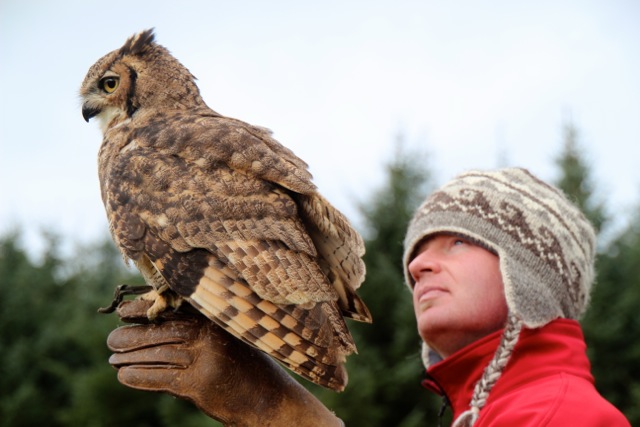
I’m deep in the Scottish countryside, sitting in a caravan surrounded by thick stone walls, listening to rain tapping the thin metal roof.  I’ve got a stockpile of local cheeses, some freshly brewed coffee, and an intermittent internet connection. It should be a perfect day for working on my book, but it’s always on these relaxed writing days that I end up provoking myself with disturbing thoughts. Today I realised just how much time I’ve spent over the past couple of years trying to figure out if I’m actually achieving anything.

Measuring our progress through life is an interesting if occasionally frustrating pastime. As we pass through our first two to three decades of life we set ourselves targets and goals. Often these are also influenced by our society, our family and our peers. My own personal milestones have been a mixed bag. Some have been somewhat reckless and accidental, like the Hemmingway-esque ‘first loss of a piece of tooth lost in a fight’. Some were dead romantic, I flew from Wellington to Paris to try to rekindle what had been a beautiful relationship with an amazing woman. Sigh. And some were genuinely pitiful, some of you may have read my article about my unicorn tattoo (April 2013, ‘On being the boy with the unicorn tattoo) But they were all significant to me, even I often only realised this after the event.

I’m sure you have all ticked your share of entertaining ‘milestone’ boxes as you’ve thundered through your twenties and thirties. Eventually a range of conditioning tools, from biological to societal, direct us towards a new way to continue measuring our progress through life. Children. These offspring become a sort of living advent calendar, minus the chocolate treat behind each door. The ticking of our clocks becomes synchronised with the beating of their hearts. Their public triumphs become our secret successes. Their transitions through the stages of life become our default method of gauging our worth, our way of determining our position on the path between womb and grave. But what about those of us who don’t have kids? How are we meant to know if we’re getting anywhere?

I never made a definitive choice not to have children, I have just never made a choice to have them. And I guess I’ve never been put in a position where I had no choice, but that’s an article for another day. There’s a willingness in some parts of societies to brand those of us who don’t have children as ‘selfish’, as if there is no other way to contribute to the world. Is this fair though? But as I gallop past my thirties I have to ask myself how I might measure my value to the world, if it’s not through the successes of my offspring. Without the child side of the equation, I could spend the rest of my life trying to figure out ‘why am I here?’, but that would indeed be selfish. Instead I want to kick some positivity back into the universe. If I’m not going to dedicate twenty years (or no doubt more if you ask my Mum and Dad…) to making my children my life’s focus, then I think I should be working towards contributing something else. Otherwise it’s like turning up to a barbeque with just a bottle opener and an eye on the beer fridge.

I hope I have an answer. I think what I need to do as a member of the ‘child free’ is to continually set myself worthy goals. And by worthy, I mean I want each goal to contribute not only to my own growth, but to create something positive for others. When I left New Zealand six months ago, I had two primary goals. Walk five hundred miles across the top of Spain, and write a book. I ended up replacing walking the El Camino de Santiago with a series of other adventures. But the other goal, the writing, that’s the way I can see myself creating something unique. I’m hoping my stories will inspire, entertain and educate. I need to focus on that goal for the moment, the less selfish one. I’ve learnt a lot about myself over the past eighteen months, and just occasionally I’ve been able to use my experiences to offer help others to understand their own problems. I’m hoping to reach a larger audience with my blog, and then eventually more people still with my books.

So if I never end up having children to pass my goals onto, I believe that if I continue to use my talents to contribute to other people’s lives then I am still valuable. And I’ll get to play the eccentric Uncle who’s always returning from strange foreign lands with barely believable stories, and creepy souvenirs.

Oh, and I will walk that damn pilgrims’ road one day. Maybe next year, before I start the next book.


The thrill of inspiration

There are few things I like better than discovering new ideas. As an adventurous cook, encountering Carolina Mustard is a marvel for the senses and another tool for the home grilling arsenal. As an author in training, having a crazy new focus for my first book pop into my head on a long drive between The Black Canyon and Aspen is like finding a crisp tenner in an old coat pocket. Two days before pay-day. Ok, maybe even better than that.

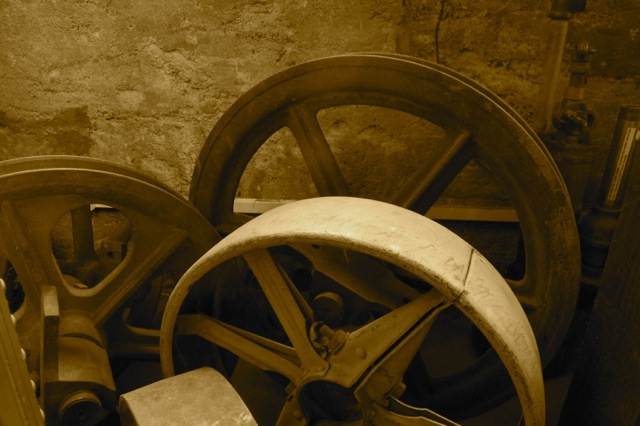
My first American BBQ tasting was last weekend, in a sweet little playground of a town called Nederland. We had driven up to check out photo opportunities around the quirky mining museum, but this place is a confluence of madness. After happy snaps of rusting machinery and coiled ropes, aiming for that classic sepia shot, we decided to pay homage at the information centre. Boomshanka! Firstly, Nederland happens to be the home of the “Frozen Dead Guy Days”, a yearly festival inspired by…a frozen Grandpa. Bredo Morstoel was cryogenically frozen in 1989, and has been on ice ever since. He’s cocooned in dry ice in a Tuff Shed above the town, and each March a range of events are held to celebrate life, and ostensibly the vague possibility of his future reincarnation. These wintry fun times range from coffin races to a cryogenics workshop. That’s right, DIY immortality, what’s not to like? Unfortunately we’d missed the event by four months, the frozen turkey bowling wouldn’t be as effective on this midsummer scorcher.

Nederland 3

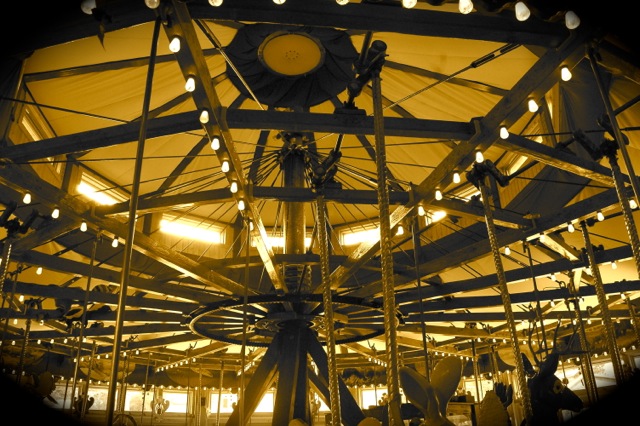
Fortunately bizarre festival t-shirts were just a start, the kindly volunteer behind the counter suggested “The Carousel of Happiness”. Who could possibly resist? A 1910 wooden carousel had been purchased sans animals by a Vietnam Vet, who then spent 26 years learning to carve replacement figures. The experience is a delightful mix of creepy and delightful. You get to choose from over thirty different beasts to mount, from the first eerie carvings of mermaids and dolphins, to the more competently sculpted gorilla. Once you’ve strapped in (it’s the US, everyone needs a thrill stopper wrapped about their ample midriff) a huge old Wurlitzer Band Organ starts pumping out a jaunty tune, and slowly you accelerate. About now the nervous “I’m a big kid at heart, this will be fun any minute now” grimace slides into a genuine mirthful grin. Based on my voyeuristic viewing of the next group of riders, the facial expression half way through “Chatanooga Choo Choo” is 90% “wheeeeeeeeee”, and 10% “Wow, this is really seriously getting quite fast now”. One dollar per ride? Magic.

Nederland 5

So buzzing like meerkats on amphetamines we decide on the Wild Mountain Smokehouse and Brewery for a stomach settler. Here you can get a beer taster in the form of a “Brewski”, literally a foot long chunk of ski, with five beer tasting glasses inserted. Second drawcard, I’ve never tasted American Barbecue. The beer was weak, but this was more than made up for by a “tasting” of BBQ sauces. And yes, of the six delicious blends, the Carolina Mustard was the star. As often seems to be the case with American cuisine, the most interesting new (to my kiwi taste buds) sensations are drawn not from molecular gastronomy, nor from classic French techniques. Instead just blitz five or six other sauces and pour on or baste. See the recipe at the end of this article. Simple, effective, wrong and yet right.

Travelling the back roads of this continent is bound to spring intermittent surprises, from ex-top-secret missile silos, to towns called Climax (haha, I kept every single one liner to myself, ever so proud). But it was a lightbulb moment on the drive between Gunnison and Aspen that rocked me a couple of days ago. I found an old copy of Steven King’s book on writing in a thrift store (charity shop…) a couple of weeks back. Steve taught me at a very young age, that the thoughts in a person’s head could be as interesting to read about as the actions that they performed as a result. And on the second read through of this lumpy explanation of his (and now my) craft, I began to worry that the central “idea” of my first book wasn’t really all that powerful. This thought sat in an uncomfortable place in my head, parked somewhere between “Do I tell my parents I love them enough?” and “Do I really REALLY need an iPad mini to write while I’m on the road?” Somehow, the easy comfort of being a passenger in an ever-changing landscape put my head in the right place for dramatic internal inspiration. Mr King had also explained that no author could really explain where the ideas came from. And this new idea, I have no idea how I came up with it. And once again I believe in magic. It certainly wasn’t the car corpses and mountain vistas that had been keeping my eyes entertained.

I’m so glad the world still has this ability to take me by surprise. I guess I try to frequently put myself in situations where I will discover new things, but it is always the unforeseen eye openers that have the most impact. At the moment I can’t share the big idea with you, that will have to wait until the publishing of my novel. But I can share the recipe for that delicious sauce. Enjoy!

Recipe for (South) Carolina Mustard BBQ Sauce

1 Cup yellow mustard

2 teaspoons Worcestershire sauce

1/4 cup wine or cider vinegar

1 tablespoon brown sugar.

1/2 cup honey

2 tablespoons tomato sauce (ketchup)

Mix all, and ideally refrigerate 24 hours before use. Apparently it’s also deelish with corned beef and hash…